
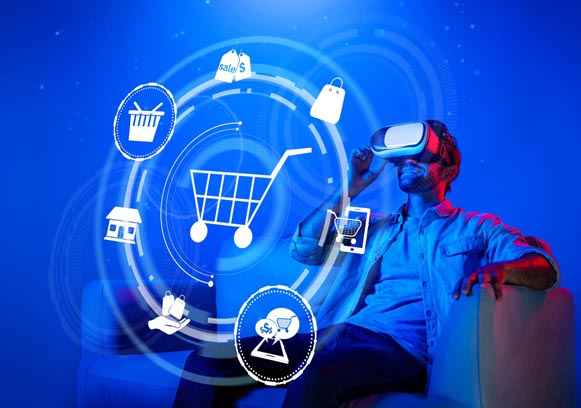
Understanding Augmented Reality in Retail
For instance, AR-powered apps allow customers to see how a pair of shoes would look on their feet or how a couch would fit in their living room. This visual interaction makes the online shopping process more tangible and reduces ambiguity. It enhances product clarity, builds trust, and boosts customer satisfaction.
Retailers are increasingly adopting AR due to its proven impact on consumer behavior. With AR, customers are more confident in their purchases, leading to fewer returns and greater customer loyalty. As this technology becomes more accessible, it's expected that AR will become a standard feature in digital shopping platforms.
Benefits of AR for E-Commerce Businesses
Another key benefit is customer engagement. AR experiences are interactive, immersive, and fun, encouraging users to spend more time exploring a brand's offerings. This increased interaction translates into higher conversion rates and improved brand perception. It also generates organic word-of-mouth marketing, as users are more likely to share their experiences on social media.
Finally, AR has operational benefits. By reducing return rates and customer complaints, businesses can cut costs and improve efficiency. Additionally, AR tools can collect valuable data on user preferences and behavior, which can be used to further refine marketing and sales strategies.
How AR is Transforming Product Try-Ons
The technology behind virtual try-ons is constantly improving. Advanced facial recognition and body-mapping algorithms allow for highly accurate and realistic previews. Brands like Warby Parker and Sephora have seen a significant boost in engagement and sales after incorporating AR try-on features into their mobile apps.
Virtual try-ons empower customers to make better decisions, increasing confidence and satisfaction. For retailers, this translates into fewer product returns and higher conversion rates. The more immersive and realistic the experience, the more likely it is to result in a completed purchase.
As AR becomes more mainstream, we can expect even more industries to embrace this innovation. Jewelry, shoes, and even fitness equipment are now being enhanced with AR experiences to offer try-before-you-buy functionality.
Ultimately, the ability to "try on" products from home is changing how consumers shop. It offers convenience, personalization, and novelty-three pillars of successful modern retail.
Industries Leading the AR E-Commerce Revolution
Fashion: Brands use AR to let users try on clothes, accessories, and makeup through apps and online platforms.Furniture: AR apps allow customers to place virtual furniture in their homes to see how it fits and looks.Automotive: Some car brands offer AR showrooms where users can explore car interiors and exteriors from their devices.Eyewear: Virtual try-on features for glasses and sunglasses have become a standard offering for many brands.Home Improvement: Paint brands and hardware stores use AR to preview wall colors, tiles, and fixtures in real settings.
Challenges in Implementing AR in E-Commerce
There's also a technology barrier. Not all consumers have devices capable of supporting advanced AR features, which limits the potential reach of these innovations. Compatibility issues across platforms and browsers can create friction and affect user experience. Retailers must ensure that AR tools are accessible and functional across multiple devices.
Another significant issue is data privacy. AR applications often require access to camera, location, or facial data, which can raise concerns among privacy-conscious users. Retailers need to be transparent about how data is collected and used and must invest in robust security measures to protect their customers.
Future Outlook for AR in Online Shopping
The future of AR in e-commerce is promising. As technology evolves, AR will become more accessible, affordable, and user-friendly. Innovations like WebAR-AR that runs directly through a web browser without requiring app downloads-are already gaining popularity. This will allow more businesses to offer AR features without major development costs.
Machine learning and AI will further enhance AR experiences by making them more personalized. Imagine AR systems that learn your preferences and suggest how a product might look based on your past behavior or style choices. This level of customization could redefine customer satisfaction and loyalty in the digital marketplace.
5G connectivity is another game-changer. With faster internet speeds, AR content will load more quickly and perform more smoothly, offering users seamless and high-quality experiences. This will reduce friction and make AR even more appealing to both customers and brands.
Collaborations between AR developers, retailers, and device manufacturers will also drive growth. As standards improve and technology becomes more integrated into everyday life, AR will likely become an essential part of the e-commerce experience. Brands that adapt early will enjoy a competitive edge.
Best Practices for Integrating AR into E-Commerce
Start with one product category: Begin by adding AR features to your best-selling or high-return items to measure impact.Prioritize user experience: Ensure the AR interface is simple, fast, and doesn't require app downloads unless necessary.Make it mobile-friendly: Most users will interact with AR through their phones, so optimize for mobile devices.Educate your audience: Use tutorials or guides to show customers how to use AR features effectively.Track performance: Use analytics to measure how AR influences customer behavior and make data-driven improvements.
Conclusion
As the technology continues to develop and become more accessible, its adoption will likely skyrocket across industries. Businesses that embrace AR early will be better positioned to stand out in a crowded digital marketplace. By prioritizing customer engagement, reducing returns, and offering novel experiences, AR sets the stage for the next generation of e-commerce.
In a world where convenience and clarity drive consumer choices, AR is emerging as a must-have tool. Its rise signals a fundamental shift in how we shop online-transforming passive browsing into active, personalized exploration.














